
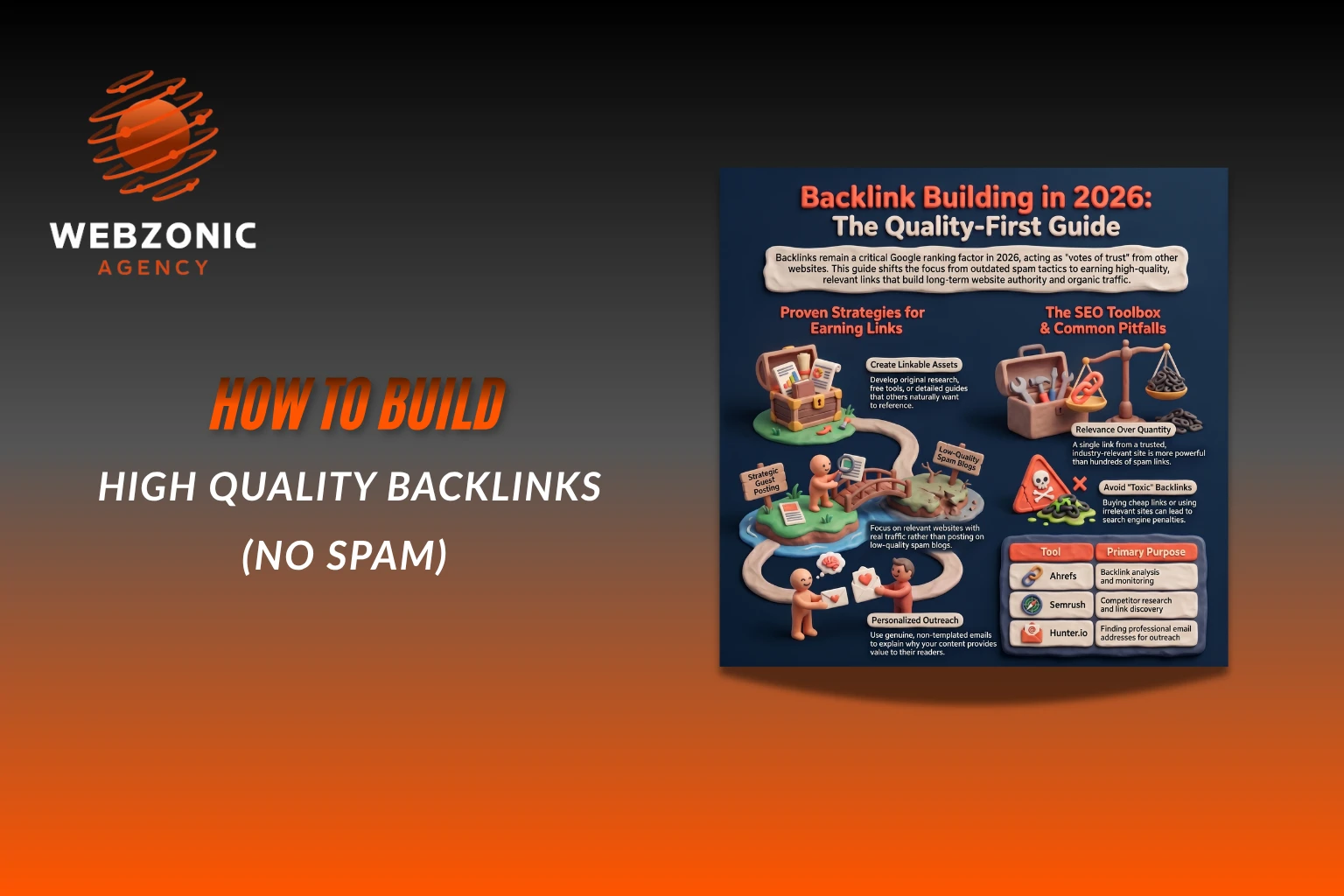
Backlinks are still one of the biggest ranking factors in SEO. But in 2026, the game has changed. Random directory submissions, spam comments, and low-quality guest posts no longer work the way they used to. If you want to rank well in Google, you need to build backlinks the right way.
The good news? You don’t need shady tactics or expensive software to get results.
In this guide, you’ll learn how to build backlinks naturally, safely, and effectively — even if you are a beginner. We’ll cover practical strategies, real examples, common mistakes, and step-by-step actions you can implement immediately.
Get Your Free Website Audit Today.
What Are Backlinks?
Backlinks are links from other websites pointing to your website. Search engines like Google treat these links as votes of trust.
For example, if a marketing blog links to your SEO article, Google may see your content as valuable and trustworthy.
The more relevant and high-quality backlinks your website has, the better chance you have to rank in Google.
But not all links are equal.
A single backlink from a trusted website can be more powerful than hundreds of spammy links.
Why High-Quality Backlinks Matter
If you want to rank well in search engines, backlinks are one of the main things you need to focus on.
Here’s why they matter:
- Improve website authority
- Help pages rank faster
- Increase organic traffic
- Build trust in the eyes of Google
- Help search engines understand your content
- Bring referral visitors from other websites
When building links, quality always matters more than quantity.
How Search Engines Work With Backlinks
Google uses backlinks to discover and evaluate content across the internet.
When a trusted website links to your page, it signals that your content is useful. In other words, backlinks help search engines decide which pages deserve higher rankings.
The authority of the linking website also matters.
For example:
- A backlink from a well-known SEO blog is stronger
- A backlink from a random spam site is weak or harmful
That’s why professional link builders focus on earning links from websites on the same topic or industry.
How to Build Backlinks the Right Way
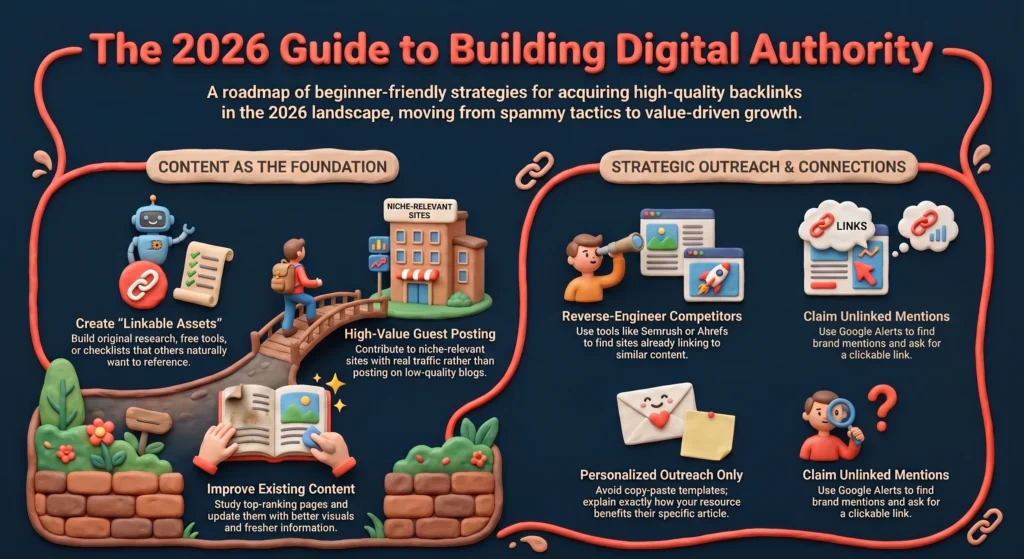
Below are practical and beginner-friendly link building strategies that actually work in 2026.
-
Create Linkable Content
People can’t link to things they don’t know exist.
One of the best ways to build links is to create content worth linking to.
Examples of linkable assets:
- Original research
- Detailed guides
- Free tools
- Statistics posts
- Infographics
- Checklists
- Case studies
For example, if you create a detailed SEO checklist, bloggers may end up linking to it in their own articles.
A good way to create content that ranks is to study the top-ranking pages in Google and improve them with better examples, visuals, and updated information.
-
Guest Posting on Relevant Websites
Guest posting still works if done correctly.
Instead of posting on spam blogs, focus on:
- Relevant websites in your niche
- Websites with real traffic
- Blogs that publish quality content
When writing guest posts:
- Add genuine value
- Avoid keyword stuffing
- Use natural anchor text
- Link to useful pages on your own website
For example, if you run an SEO agency, you can write for digital marketing blogs and include a relevant link back to your website.
-
Find Competitor Backlinks
One of the easiest ways to learn how to build backlinks is to study your competitors.
Use tools like:
- Ahrefs
- Semrush
- Ubersuggest
- Moz Link Explorer
Check:
- Which websites link to them
- What kinds of pages attract links
- Which content gets the most links
This helps you discover proven link opportunities.
If a website linked to your competitor’s SEO guide, there’s a chance they might also link to your improved version.
-
Use Outreach Emails
Reaching out to website owners still works when done properly.
But avoid copy-paste spam emails.
Instead:
- Personalize your message
- Mention their article
- Explain why your content is useful
- Ask politely for a link
Example:
If someone wrote an article about SEO tools and you have a useful free SEO resource, you can reach out to them and suggest adding your page.
Simple and genuine outreach gets better results.
-
Turn Brand Mentions Into Links
Sometimes websites mention your business but don’t link to you.
These are called “unlinked mentions.”
You can:
- Find mentions using Google Alerts or Ahrefs
- Contact the website owner
- Ask them to add a clickable link
This kind of link building is often easier because they already know your brand.
-
Build Relationships in Your Industry
A lot of successful link building comes from networking.
Connect with:
- Bloggers
- SEO experts
- Journalists
- Industry websites
- Content creators
Share their content, comment on posts, and build real relationships.
Over time, these connections can lead to natural backlinks.
Get Your Free Website Audit Today.
Step-by-Step Backlink Building Checklist
Here’s a practical checklist you can start using today.
Step 1: Create Valuable Content
Publish content that solves problems and helps users.
Step 2: Research Competitors
Analyze competitors backlinks to see what worked for them.
Step 3: Find Link Prospects
Make a list of relevant websites in your industry.
Step 4: Reach Out
Send personalized emails and explain why your content deserves a link.
Step 5: Promote Your Content
Share it on social media, forums, and communities.
Step 6: Track Your Links
Use SEO tools to monitor backlinks and rankings.
Step 7: Improve Existing Content
Update old articles regularly to attract more links.
Best Link Building Tools
Here are some of the most popular link building tools used by SEO professionals:
| Tool | Purpose |
| Ahrefs | Backlink analysis |
| Semrush | Competitor research |
| Moz | Website authority checker |
| Hunter.io | Find email addresses |
| BuzzSumo | Content research |
| Google Search Console | Track backlinks |
These tools help measure the authority of websites and find link opportunities faster.
Common Backlink Building Mistakes to Avoid
Many beginners make mistakes that hurt rankings instead of improving them.
- Buying Spam Links
Cheap backlinks from random websites can lead to penalties.
- Using Exact Match Anchor Text Too Much
Over-optimized anchor text looks unnatural.
- Ignoring Relevance
Links from unrelated websites are less effective.
- Creating Low-Quality Content
Even good outreach won’t help if your content is weak.
- Building Too Many Links Too Fast
Natural growth is safer and more sustainable.
Real-Life Examples of Effective Link Building
Example 1: SEO Checklist Guide
A small agency published a detailed SEO checklist with screenshots and examples. Bloggers started linking to it naturally, and the page ranked on Google within months.
Example 2: Free SEO Tool
A website launched a free keyword tool. Because it was useful, many websites linked to it without outreach.
Example 3: Guest Posting Strategy
A digital marketer wrote guest posts on marketing blogs and gained high-authority backlinks that improved rankings for competitive keywords.
Client Testimonials
Sarah M. – E-commerce Store Owner
“After improving our backlink strategy, organic traffic increased by 65% in just four months. The quality links made a huge difference.”
Daniel R. – Local Business Owner
“We stopped buying spam links and focused on outreach instead. Our rankings became much more stable.”
Ahmed K. – SaaS Startup Founder
“The backlink audit and link building campaign helped us move from page 3 to page 1 for several important keywords.”
People Also Ask (PAA)
How do you build backlinks for beginners?
Start by creating helpful content, researching competitors, and reaching out to relevant websites. Focus on quality instead of quantity.
Are backlinks still important in SEO?
Yes. Backlinks remain one of the strongest ranking signals in Google and help improve authority and visibility.
How many backlinks do I need to rank?
There is no exact number. A few high-quality backlinks can outperform hundreds of low-quality links.
What are toxic backlinks?
Toxic backlinks come from spammy or irrelevant websites and may negatively impact rankings.
Can I build backlinks without guest posting?
Yes. You can earn links through tools, research, outreach, statistics posts, and shareable content.
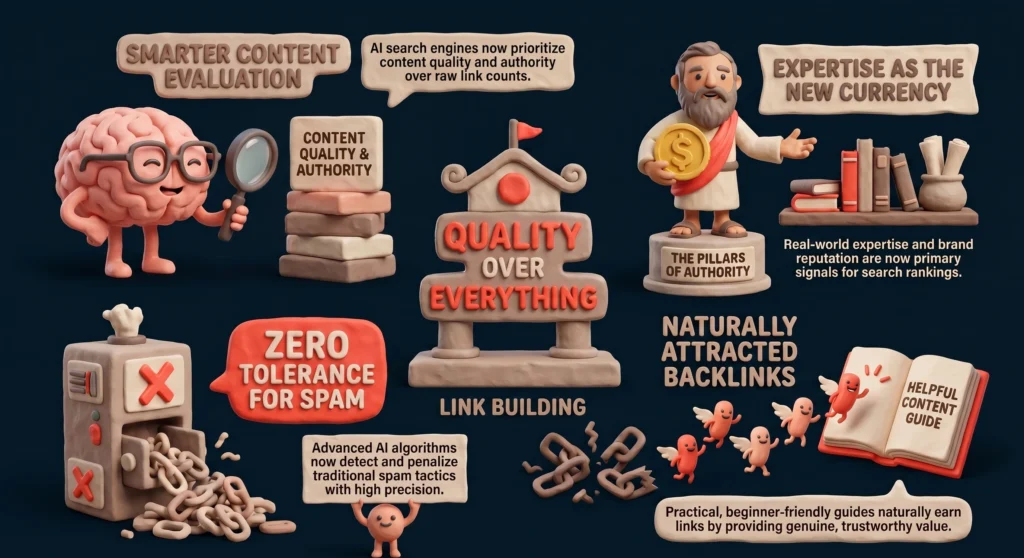
How AI Search Engines Are Changing Link Building
AI search engines are becoming smarter at evaluating content quality and authority.
This means:
- Helpful content matters more
- Spam tactics are easier to detect
- Real expertise becomes important
- Brand authority plays a bigger role
If you want to rank in Google and AI-powered search platforms, focus on creating trustworthy and valuable content.
Complete SEO Guide for Beginners (2026) – Step-by-Step from WebZonic Agency can naturally attract backlinks because it provides practical SEO knowledge for beginners.
Why Businesses Choose WebZonic Agency
WebZonic Agency offers professional SEO Services designed to help businesses grow organically through ethical and effective SEO strategies.
Their services include:
- High-quality link building
- Technical SEO
- SEO audits
- Keyword research
- Content optimization
- Local SEO
- Website ranking improvement
Whether you are a startup, local business, or e-commerce brand, investing in proper SEO and link building can significantly improve long-term visibility.
Conclusion
Learning how to build backlinks the right way takes time, but it’s one of the best investments you can make for SEO.
Instead of chasing spam links, focus on:
- Creating valuable content
- Building real relationships
- Earning relevant backlinks
- Helping your audience
Remember, quality always beats quantity.
If you want long-term SEO success, ethical link building is the way forward.
Need help building high-quality backlinks for your business? Contact WebZonic Agency for professional SEO and link building services tailored to your goals.
Get Your Free Website Audit Today.
Author Bio
Written by Muhammad Taha, an SEO Specialist at WebZonic Agency, helping businesses grow their online presence through effective SEO and digital marketing strategies.